నా గురించి

నా ఫోటో
నేనో అలుపెరగని బాటసారిని. గమ్యమెరుగని దేశదిమ్మరిని...:)
ఈ వారం చారిత్రక కట్టడం లేబుల్‌తో ఉన్న పోస్ట్‌లను చూపుతోంది. అన్ని పోస్ట్‌లు చూపించు

28, జనవరి 2013, సోమవారం

ఈ వారం (27 Jan-02 Feb 2013):చారిత్రక కట్టడం!

మహానంది ఆలయం

ఆంధ్ర ప్రదేశ్ రాష్ట్రములోని కర్నూలు జిల్లాలోని ప్రముఖ శైవ క్షేత్రము మరియు ఒక మండలము. నంద్యాల కు 14 కి.మీ దూరంలో ఉన్న మహాక్షేత్రం మహానంది. ఇక్కడ గల స్వామి మహానందీశ్వరుడు, అమ్మవారు కామేశ్వరీ దేవి. ఇక్కడి మహానందీశ్వర దేవాలయం 7వ శతాబ్ధినాటిది. ఈ ఆలయ శిల్పశైలిని బట్టి ఇది బాదామి చాళుక్య చక్రవర్తి వినయాదిత్యుని పాలనాకాలం (680-696) నాటిదని అంచనా. 

* Picture from Wikimedia Commons


Mahanandi (Telugu: మహానంది) is a village located east of the Nallamala Hills near Nandyal, Kurnool District, Andhra Pradesh, India. It is a picturesque village surrounded by thick forests. Within 15 km of Mahanandi, there are nine Nandi shrines known as Nava Nandis. Mahanandi is one of the Nava Nandis. The Mahanandiswara Swamy Temple, an important shrine, is located here. This ancient temple dates back over 1,500 years. The inscriptions of 10th century tablets speak of the temple being repaired and rebuilt several times.

23, జనవరి 2013, బుధవారం

ఈ వారం (20-26 JAN 2013):చారిత్రక కట్టడం!


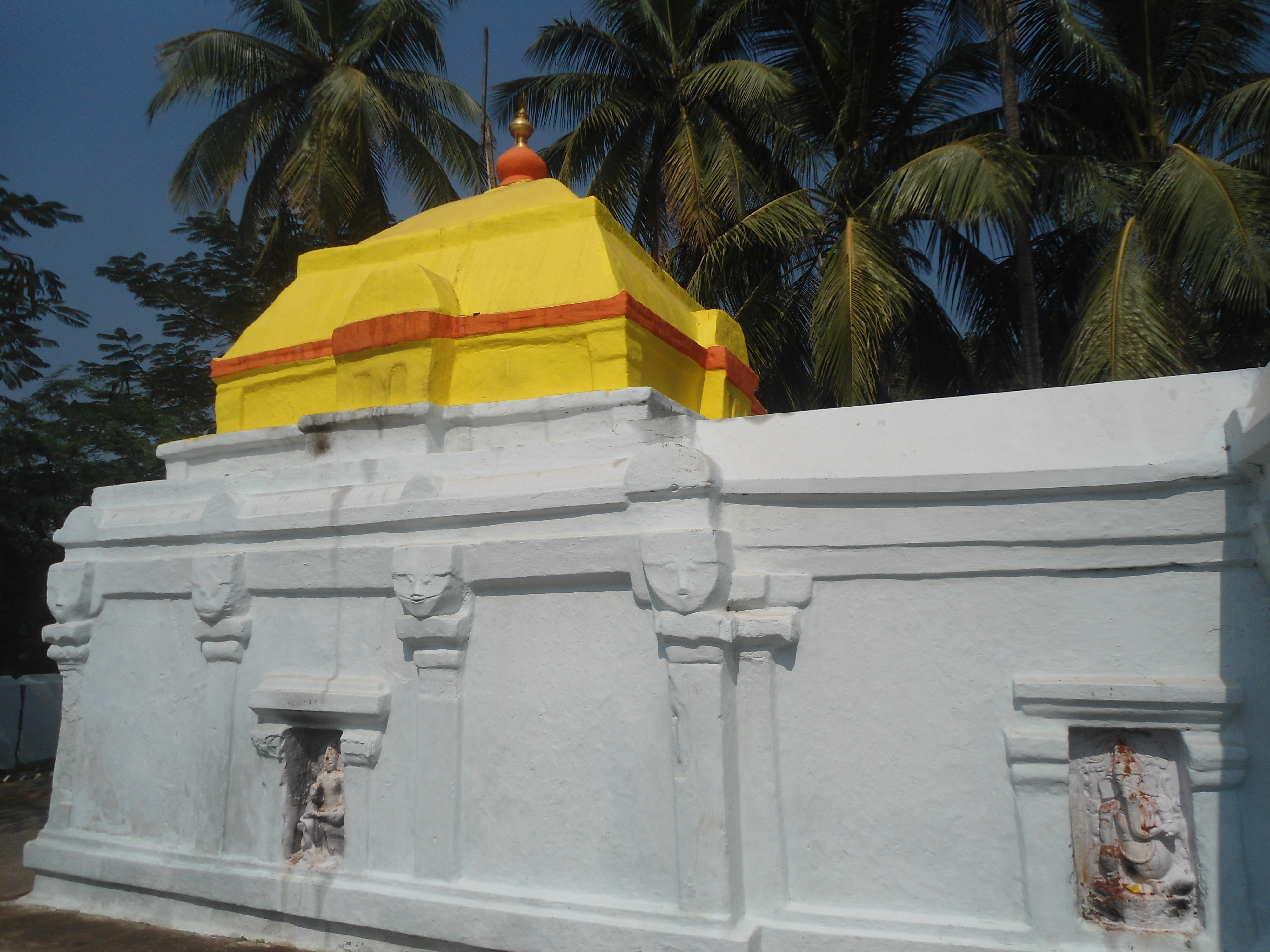
అమరేశ్వరాలయం, తూర్పు చాలుక్యుల నిర్మాణ శైలి, పురాతన ఆలయం.
బోని గ్రామం , ఆనందపురం మండలం, విశాఖ జిల్లా

Amareswara Temple, Boni village in Anandapauram mandal, 
Visakhapatnam district, Andhra Pradesh.

17, జనవరి 2013, గురువారం

ఈ వారం (13-19 JAN 2013):చారిత్రక కట్టడం!


ఆదోని కోట
కర్నూలు జిల్లా లోని ఒక పట్టణం

Adoni (Telugu: ఆదోని, Hindi: आदोनी, Urdu: ادونی) (also known as Adhoni) is a municipality(Nagar Palika), mandal headquarters and commercial town in Kurnool district in the Indian state of Andhra Pradesh. It is 180 miles (300 km) from Hyderabad and 307 miles (494 km) from Chennai by rail. The famous Mantralayam (Swami Raghavendra's mutt) is near to Adoni.

7, జనవరి 2013, సోమవారం

ఈ వారం (06-12 JAN 2013):చారిత్రక కట్టడం!

మహా చైత్యము, అమరావతి, గుంటూరు జిల్లా 

అమరావతి, ఆంధ్ర ప్రదేశ్‌ గుంటూరు జిల్లాలో ఒక పట్టణము, ఇదేపేరుతో ఉన్న రెవిన్యూ మండలానికి కేంద్రము. ఇది గుంటూరు జిల్లాలో కృష్ణా నదీ తీరానికి కుడి వైపున ఉన్నది. అమరావతికి సమీపంలో ఉత్తరాన ఉన్న ధరణికోట ఒకప్పటి ఆంధ్ర శాతవాహనుల రాజధానియైన ధాన్యకటకం. శాతవాహనుల కాలంలో బౌద్ధ మతం పరిఢవిల్లింది. ప్రాచీన బౌద్ధ వాజ్మయములో విశిష్ఠ స్థానము పొందిన 'ఆంధ్రపురి'యే ధాన్యకటకం. నేటి అమరావతి, ధరణికోట అందులోని భాగాలే. బుద్ధుని జీవితకాలమునుండి క్రీ. శ 14వ శతాబ్దివరకు ఇక్కడ బౌద్ధం నీరాజనాలందుకొంది. మరుగునపడిన చైత్యప్రాశస్త్యం తిరిగి 18వ శతాబ్దములో వెలుగు చూసింది. దీపాలదిన్నె గా పిలువబడిన పెద్ద దిబ్బను త్రవ్వి 1797 లో మహాస్తూపాన్ని వెలుగులోకి తెచ్చిన వ్యక్తి కల్నల్ కోలిన్ మెకంజీ.

29, డిసెంబర్ 2012, శనివారం

ఈ వారం (23-29 DEC 2012):చారిత్రక కట్టడం!

Vontimitta Kodandarama temple Gopuram

* Picture from Wikimedia commons

Vontimitta is a mandal head quarters in Kadapa district, Andhra Pradesh, India. Vontimitta is located about 28 kilometers from the city ofKadapa and close to the town of Rajampet. It is a place of historical and cultural importance and is home to a 450 year old temple of BhagawanSree Rama known as the Sri Kodandarama Swamy temple. According to the legend, the temple had constructed by two devotees of Lord Rama, named Vontudu and Mittudu, in one single day. After constructing the temple, they sacrificed their lives and turned into statues. You can find those statues, even now, at the entrance of the temple. Lord Rama statue was established by Lord Jambavanta. And it is the only place in India,where the Sree Seeta Rama kalyanam will be held in the night.
The great devotee of Sri Rama and composer Annamacharya is associated with this legendary temple and lived in Tallapaka located nearby. The temple is also associated with Jambuvantha of the Ramayana. The temple is noted for its sculpture and is notified as an Ancient Monument by the Archaeological Survey of India. The composite image in the garbhagriha of the temple is that of Rama, Lakshmana and Sita is believed to be carved from a single rock. An Anjaneya or Hanuman temple is located close by.

18, డిసెంబర్ 2012, మంగళవారం

ఈ వారం (16-22 DEC 2012): చారిత్రక కట్టడం!

Ghanpur (Mulug) is a village and a mandal in Warangal district in the state of Andhra Pradesh in India.
 Ghanpur has group of splendid temples and a beautiful lake with four canals. They are well worth a visit because of the architectural skills that they display. Popularly known as Kota Gullu and Ghanapur lake,these things are surely going to succeed in making a mark in your minds. This place is 66 km from Warangal.


*picture from wikimedia commons

The Ghanpur group of temples are located in Ghanpur mandal, around 62 km away from Warangal. It is locally known as "Kota Gullu" It is believed that Ghanpur got its name from the illustrious King Ganapatideva who ruled between 1199 AD - 1260 AD. Exposed to the vagaries of nature and continuous battles, the temple complex is in a dilapidated condition but speaks volumes of the architectural proficiency of the Kakatiyas. The temples are now being renovated by the Dept. of Archaeology. The Ghanpur group of temples, comprising 22 temples constructed within a double walled stone enclosure contains a veritable museum of Kakatiya art and architecture. Among the group of temples, the main temple, which is dedicated to Lord Shiva, is the most attractive. The main attraction is of the Sabhamandapa porches. Mythical figure brackets such as Gaja-Kesari, Half human-Lion form riding on elephant, Horse-head Lion back on elephant are arranged under the eaves of some porticos. To the north of the main temple is another temple dedicated to Siva, which is an exact replica of the main temple. To the south of the main temple is a pillared mandap whose central ceiling is decorated with different kinds of motifs. There are more than nineteen sub temples each consisting of a garbhgriha and antarala, placed around the main temple. Luxuriant vegetation serves as a beautiful backdrop to the temples and the visitor is overwhelmed by the beauty of the ancient temples amidst the tall and lofty palms.

10, డిసెంబర్ 2012, సోమవారం

5, డిసెంబర్ 2012, బుధవారం

ఈ వారం (2-8 DEC 2012): చారిత్రక కట్టడం!


* picture credit goes to the original photographer.

(Kolanupak) Kulpakji is a Jain shrine at the village of Kolanupaka in Nalgonda district, Andhra Pradesh, India. The temple is said to be more than 2000 years old. The temple was recently renovated by employing more than 150 artisans from Rajasthan and Gujarat. The temple houses three idols: one each of LordRishabha, Lord Neminath, and Lord Mahaveer.

27, నవంబర్ 2012, మంగళవారం

22, నవంబర్ 2012, గురువారం

ఈ వారం (18-24 NOV 2012): చారిత్రక కట్టడం

Bavikonda Maha Stupa

Bavikonda Buddhist Monastery  Lies about 16 km from Visakhapatnam city on a hill about 130 mts. Above Mean Sea Level. The term Bavikonda in Telugu language means a hill of wells. As per its name, Bavikonda is a hill which has wells for the collection of rainwater. Bavikonda Monastery dates back to the 3rd century BCE. 
It is one of the oldest and immensely sacred Buddhist sites in Asia.

11, నవంబర్ 2012, ఆదివారం

ఈ వారం (11-17 NOV 2012): చారిత్రక కట్టడం

1000 year's old Golingeswara and Subhramanya Swamy Temple Complex, Biccavolu, EG District. AP

Biccavolu (Birudankinavolu) which contains several important temples of the Eastern Chalukya period. The village is named after the King Gunaga Vijayaditya III. The name of the village Biccavole derived from the ruler to Turupu Chalakya Vamsam during their period 849–892 BC and the rulers constructed number of important temples during their period around the Biccavole village. Out of which one of the temple, Sri Raja Rajeswari vari temple and Sri Chandrasekhara Swamyvari temple. They are very prominent with great Silpakala nypunyam.Biccavolu got its glory from KamaReddy after Cholas and krishna devarayas. King Kamineni Kama reddy (Kamma Cummunity) developed this part of the Vasishta and Godavari delta.

The central shrine of Golingeswara has a wealth of iconographic material, as all around it, and a beautiful Sivalingam and 33 lines sasanam on the door jambs. In the Mukhamandapam of the temple of Sri Golingeswara are preserved two exquisite masterpieces of Eastern Chalukyas sculputure.

7, నవంబర్ 2012, బుధవారం

ఈ వారం (4-10 NOV 2012): చారిత్రక కట్టడం


                                                                                     బృహదీశ్వరాలయం, తంజావూరు
                                                         
                                                               photograph in 1998

The most visited monument in Thanjavur is the Brihadeeswarar Temple, whose construction, the historian Percy Brown described as "a landmark in the evolution of building art in South India".Built in the 11th century AD by the Medieval Chola king Raja Raja Chola I, the temple complex houses a granite shrine dedicated to the Hindu god Shiva and is surrounded by fortifications.The walls of the sanctum are covered with wall paintings from the Chola and Nayak periods

28, అక్టోబర్ 2012, ఆదివారం

ఈ వారం (28oct -3nov 2012): చారిత్రక కట్టడం

దిగువ మంగళగిరి గాలి గోపురం
Photograph in 2009
Mangalagiri means 'The holy hill'. Near the foot of the stone flight of steps is a stone pillar with a Telugu inscription, recording grants of villages. It is dated AD 1520 and mentions the capture of Kondavidu by Timmarasu, general of Krishna Deva Raya, in 1515 from the Gajapati rulers ofKalinga(ancient Orissa). Another stone near the temple of Garudalvar has inscriptions on four sides recording grants in the reign of Sadasiva Rayaof Vijayanagara Empire AD 1538. The lofty gopuram in the temple at the foot of the hill was erected by Raja Vasireddy Venkatadri Nayudu in 1807-1809,and in terms of sculpture and architecture this temple stands to be an ultimate testimant for the ancient vishwakarma sthapathis in planning and sculpting these temples.
Mangalagiri was under the control of Golkonda Nawabs for a long period. It was plundered by in 1780 by Hyder Ali but could not be conquered. In 1816, a gang of Pindaris again looted the place. It slowly recovered from these two attacks during the time of Raja Vasireddy Venkatadri Nayuduwho ruled the place from Amaravati.

24, అక్టోబర్ 2012, బుధవారం

ఈ వారం (21-27 OCT 2012): చారిత్రక కట్టడం

సౌమ్యగిరి (భీమిలి) నరసింహ స్వామి ఆలయం, విశాఖ జిల్లా

Temple of Lord Narasimha . As per the history, the temple is reconstructed in 1304 CE by Mindi Rayappa Ramajogi and Murugappa Setti/Alagappa Setti have presented the brass cover in 1983.

16, అక్టోబర్ 2012, మంగళవారం

ఈ వారం (14-20 oct 2012): చారిత్రక కట్టడం

అరసవిల్లి సూర్యనారాయణ స్వామి వారి దేవస్థాన ముఖద్వారం
Photographed in 2008 December

Arasavilli is an ancient Hindu temple dedicated to the sun god Surya, located near the Srikakulam town of Andhra Pradesh, India. The original name Harshavalli means abode of joy.

The temple is believed to have been built in the 7th Century AD by the Kalinga rulers Devendra Varma of Orissa.
Arasavalli is home to an ancient temple to the Sun (Suryanarayana) - said to have been built originally by the Kalinga rulers of Orissa around the 7th century CE. Arasavalli is located at Srikakulam near Vishakapatnam in Andhra Pradesh.. Also near Srikakulam are the Mukhalingam temples built in the Orissa temple idiom, and Sree Kurmam bearing a shrine to Vishnu depicting his Kurma avataram.
Legend has it that Indra the king of Gods attempted to force his entry into the temple of Koteeshwara - Shiva and was thrown away by the gatekeeper Nandi. Repentful of his arrogance in attempting to force his entry, Indra enshrined Surya the Sun God in a temple and performed worship services, at Arasavalli.
A black granite image of Surya about 5 feet in height bearing lotus buds (hence the name Padma Paani), flanked by his consorts Padma, Usha and Chhaaya, on a 7 horse driven chariot is the object of worship here. At the base of the image are the gate keepers Pingala and Danda and the saints Sanaka and Sananda. Surya's charioteer Aruna (Anoora) is also depicted in the image.
The Arasavalli teemple was built by the Eastern Kalinga Kings who ruled over the Kalinga region from the 4th through the 14th century CE. Inscriptions reveal grants made by Aditya Vishnu Sarma and Bhanu Sarma of the Kalinga clan. The present structure is largely a result of 18th century renovations.
The Temple is a Panchayatana temple with Aditya in the center, with Ganesha, Shiva, Parvati and Vishnu in four corners of the quadrangle. An image of Indra is also enshrined in this temple.